
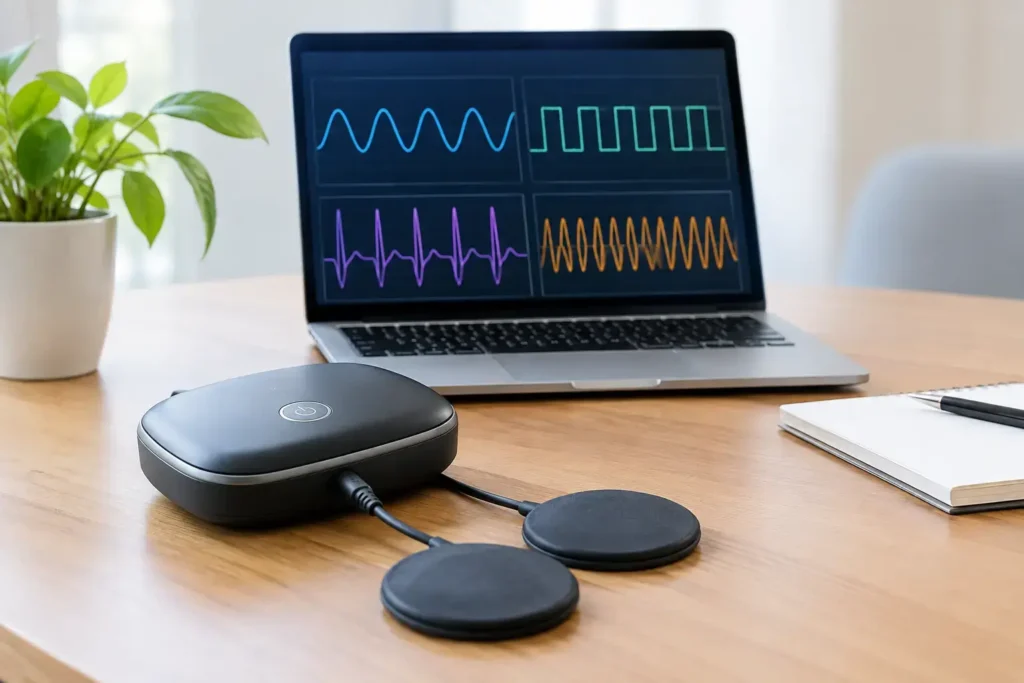
A PEMF waveform comparison can look deceptively simple: one device uses a sine wave, another a square pulse, and a third advertises a proprietary signal. But for a serious buyer considering a premium home or professional wellness system, waveform shape is only one part of the decision. The practical question is whether the system gives you controlled, repeatable, comfortable sessions – and whether you will receive the guidance to use it with confidence.
A waveform is the visual pattern of how an electrical signal rises, falls, and repeats over time. In a PEMF system, that changing current drives a coil or applicator and produces a changing magnetic field. Manufacturers may highlight waveform terminology because it is technical and meaningful. Still, waveform claims should never be evaluated in isolation from frequency range, magnetic flux density, pulse timing, applicator design, polarity behavior, and user support.
PEMF Waveform Comparison: Start With the Signal Shape
The most common waveform descriptions in PEMF are sine, square, sawtooth, and modified or proprietary pulsed patterns. None is automatically the “best” waveform for every person, every setting, or every wellness goal. The quality of the implementation matters as much as the name on the specification sheet.
Sine waves
A sine wave rises and falls smoothly in a rounded, continuous pattern. It is familiar in electrical engineering because it is orderly and predictable. In PEMF, a sinusoidal signal may feel gentle and is often associated with systems designed for broad wellness routines, relaxation sessions, and regular home use.
Its smooth transition is not a shortcut to judging a system’s overall quality. A sine-wave device can vary dramatically from another sine-wave device based on its intensity, frequency options, timer settings, coil construction, and ability to deliver the selected program consistently. A buyer should look beyond the word “sine” and ask what the device actually allows them to control.
Square waves and sharper pulses
A square wave shifts rapidly between high and low states. Because its edges change more abruptly than a sine wave, it contains a wider mix of frequency components. Some PEMF manufacturers use square or near-square pulses to create distinct on-off magnetic stimulation patterns.
This does not mean sharper is always stronger, better, or more appropriate. Fast-rising pulses can be one useful engineering choice, but comfort, intended use, applicator placement, and conservative protocol selection still matter. A well-designed premium system should help the user begin at sensible settings rather than assuming that a more aggressive-looking waveform produces a superior wellness experience.
Sawtooth, trapezoidal, and proprietary patterns
A sawtooth waveform rises in one direction and resets more quickly, while a trapezoidal waveform may include a flat segment before changing direction. Proprietary waveforms can combine elements of multiple patterns, pulse trains, pauses, and polarity changes.
These designs may be purposeful, particularly when paired with programmed frequency sequences. Yet “proprietary” is not proof by itself. Ask for a plain-language explanation of the signal, its available settings, the rationale for its protocol structure, and how the system is intended to be used. A manufacturer or distributor should be able to answer without hiding behind jargon.
Why Waveform Alone Does Not Decide PEMF Quality
Waveform discussions often become overly narrow because the diagrams are easy to compare. The harder truth is that two devices with the same claimed waveform can produce very different user experiences and technical capabilities.
First, consider frequency. Frequency is the number of cycles or pulses delivered per second, measured in hertz. Low-frequency PEMF systems may offer fixed frequencies, adjustable frequency ranges, or preprogrammed sequences. More options are not automatically better, but enough flexibility can be valuable when you want to build a consistent relaxation, sleep-preparation, or recovery-support routine without manually guessing at every session.
Second, look at intensity, commonly expressed as gauss or microtesla. A specification only becomes meaningful when you know where and how it was measured. Is the stated value at the applicator surface, at a defined distance, or an unspecified peak reading? Full-body mats, localized applicators, and smaller spot applicators naturally have different field characteristics. The goal is not to chase the biggest headline number. It is to understand the setting range, the intended application, and how comfortably the device fits your routine.
Third, assess pulse timing. Duty cycle, burst length, pauses, repetition rate, and session duration all influence how a PEMF program operates. A system may use a familiar waveform but package it into a thoughtful sequence that feels more practical for daily use. This is where a protocol-guidance tool and personal onboarding can make a measurable difference in the ownership experience.
Finally, pay attention to polarity. Some systems alternate magnetic polarity during operation, while others use a single-polarity approach or offer different program structures. Alternating polarity can be a relevant design feature, but it should be explained within the complete program design rather than presented as a standalone miracle specification.
Match the System to How You Will Actually Use It
For a full-body wellness routine, mat coverage, material quality, controller usability, program selection, and the ability to create a calm environment may matter as much as waveform type. A system with integrated relaxation features, such as sound-and-light components or FIR options where available, may be a better fit for someone building an evening wind-down ritual than a bare-bones device with impressive pulse terminology.
For focused use, a localized applicator can be more relevant than a large mat. The applicator’s coil design, size, ergonomics, and placement guidance affect real-world usability. A premium system should support both flexibility and simplicity: enough capability for an engaged wellness user, without forcing every family member to become a signal engineer.
This is also where buying for the long term changes the comparison. If a system will be used regularly by a household, wellness practice, or active professional, consider the controller’s reliability, construction quality, safety documentation, warranty terms, and training available after the sale. The best-looking waveform chart has limited value if the system ends up in a closet because no one feels certain which program to run.
Questions to Ask During a PEMF Waveform Comparison
A worthwhile consultation should move past marketing labels. Ask whether the waveform is fixed or adjustable, what frequency and intensity ranges are available, how polarity is handled, and whether specifications are clearly measured and documented. Ask which applicators are included, whether the system can expand over time, and what onboarding is provided after delivery.
Also ask for protocol guidance tailored to your lifestyle. Someone seeking a quiet relaxation practice before bed may prioritize different settings and features than an athlete organizing a post-training recovery routine. Both users deserve conservative, understandable direction rather than generic claims.
Be cautious of sellers who imply that one waveform treats, cures, or prevents medical conditions. PEMF wellness systems should be presented within their intended non-medical positioning: tools that may support relaxation, healthy sleep habits, stress management, mental acuity, and natural recovery routines. Individuals with implanted electronic devices, pregnancy considerations, diagnosed health conditions, or other safety questions should consult an appropriate healthcare professional and follow device-specific instructions before use.
The Premium Difference Is Guidance, Not Just Specifications
Technical literacy protects a high-ticket purchase. It helps you distinguish a meaningful specification from a dramatic but incomplete sales claim. But most owners do not need a physics lesson every time they use their mat. They need to know which program fits the moment, how to start comfortably, where to position an applicator, and who to contact if they have a question.
That is why iMRS2000.com places personal education and post-purchase support alongside sophisticated PEMF technology. A premium system is a wellness investment, not a box of unexplained settings. Clear training helps you use its features consistently and make informed adjustments as your routine develops.
Choose the waveform details that are transparent, the system features you will genuinely use, and the expert support that remains available long after the delivery date. That combination is what turns a complex PEMF comparison into a confident, sustainable wellness practice.
