
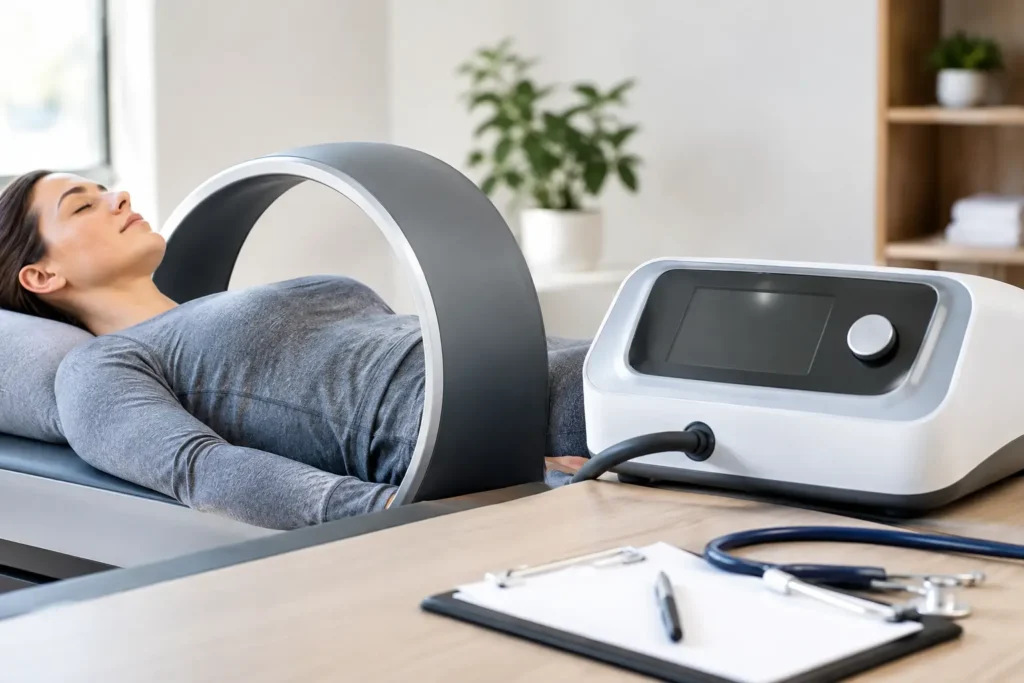
A premium PEMF purchase deserves more than a vague badge or a reassuring sales phrase. When buyers ask, “Are PEMF systems FDA cleared?” the accurate answer is: some PEMF devices have FDA clearance for specific medical intended uses, but that does not mean every PEMF system, every applicator, or every wellness claim is FDA cleared.
That distinction matters. PEMF is a broad technology category, and systems can vary dramatically in their design, output, accessories, labeling, and intended purpose. A full-body wellness mat used to support relaxation and healthy sleep habits is not automatically evaluated the same way as a device marketed to treat a diagnosed medical condition.
For a significant at-home wellness investment, knowing what FDA language actually means helps you compare systems with confidence, avoid exaggerated claims, and choose support that respects both the technology and the rules around it.
Are PEMF Systems FDA Cleared? The Short Answer
Some pulsed electromagnetic field devices have been cleared by the FDA, typically through the 510(k) process, for narrowly defined medical indications. However, FDA clearance attaches to a particular device and its specific intended use. It is not a blanket credential that transfers to all PEMF products from the same manufacturer, all versions of a product, or the entire PEMF category.
A company may sell a PEMF wellness system in the United States without claiming that it diagnoses, treats, cures, mitigates, or prevents disease. In that setting, the product’s messaging should stay within a non-medical wellness position, such as supporting relaxation, stress management, sleep routines, and natural recovery.
The practical takeaway is simple: do not treat the phrase “PEMF is FDA cleared” as an answer. Ask which exact model is being discussed, what the FDA-cleared intended use is, and whether that use has any relevance to how you plan to use the system at home.
FDA Cleared Is Not the Same as FDA Approved
These terms are often used interchangeably in marketing, but they mean different things.
Most medical devices that enter the U.S. market do not receive “FDA approval” in the way many prescription drugs do. Instead, many are FDA cleared through a 510(k) premarket notification. In broad terms, a manufacturer demonstrates that its device is substantially equivalent to another legally marketed device, called a predicate, for a defined intended use.
FDA approval usually refers to the more intensive premarket approval pathway used for certain higher-risk medical devices. Some devices may also reach the market through a De Novo classification process. The correct regulatory pathway depends on the device type, risk profile, claims, and classification.
For a consumer comparing PEMF systems, the crucial point is not to chase the word that sounds strongest. It is to understand what, if anything, has been reviewed, for which product, and for which claim.
Registration and Listing Are Different From Clearance
Another source of confusion is the phrase “FDA registered.” FDA registration and device listing can be required activities for certain establishments and medical devices. They do not mean the FDA has cleared, approved, certified, recommended, or endorsed a product.
This is especially relevant when a seller presents “FDA registered” as if it were proof that a wellness mat has been cleared for medical treatment. It is not. Registration describes an administrative relationship with the agency. Clearance concerns a specific device and a specific intended use.
The same caution applies to statements about a manufacturer’s facility, individual components, or a separate product in the company’s catalog. A system’s controller, mat, localized applicator, and software-guided programs should be evaluated as the actual product you are considering, not through an association with a different device.
Why Intended Use Changes the Regulatory Conversation
A PEMF system can be sophisticated, precisely engineered, and built with premium materials while still being marketed as a wellness product rather than a medical device. That is not a weakness. It is a matter of intended use and truthful labeling.
Claims drive regulatory risk. Saying a system supports a calming evening routine is materially different from saying it treats insomnia. Saying it may complement natural recovery habits is different from saying it heals an injury. Saying it supports relaxation is different from claiming to treat anxiety or depression.
The more directly a product is marketed to address a disease, injury, diagnosis, or clinical outcome, the more important it becomes to verify whether the exact device has the appropriate FDA status for that claim. No PEMF system should be presented as a substitute for medical evaluation, prescribed treatment, or emergency care.
This is also why responsible education matters. Buyers deserve clear guidance on what a system is designed to do, what it is not designed to do, and how to build a sensible wellness routine around it.
What FDA Clearance Does and Does Not Tell You
FDA clearance can be meaningful when it applies to the exact device and intended use under discussion. It can indicate that a device has passed through a defined regulatory review pathway for that use. But it does not automatically establish that a product is the best choice for every person, every health goal, or every home environment.
It also does not tell you everything that matters in a high-end PEMF purchase. A clearance claim does not, by itself, answer questions about full-body coverage, frequency options, intensity settings, waveform design, polarity switching, applicator quality, ease of use, onboarding, warranty support, or long-term access to knowledgeable guidance.
Conversely, a wellness-oriented system should not be dismissed simply because it is not marketed for a medical indication. The right system depends on your goal. Someone seeking a non-invasive tool for relaxation, recovery routines, and sleep-supporting habits is making a different decision from someone seeking treatment for a diagnosed condition.
How to Verify a PEMF Claim Before You Buy
A credible seller should welcome informed questions. If FDA status influences your decision, request the manufacturer’s legal name, the exact model name, the intended use stated in the product labeling, and the applicable 510(k) number if clearance is claimed.
Then compare the language carefully. The clearance documentation should match the specific product and the precise medical claim being made. If a company says that a related model, a component, or PEMF technology in general is cleared, that is not the same as evidence for the system in front of you.
You should also be cautious with international credentials. CE marking, electrical safety testing, quality-system standards, and other global certifications can be relevant to product quality and market access, but they are not interchangeable with U.S. FDA clearance. Each designation answers a different question.
Finally, ask for practical use guidance. A premium system should come with clear instructions, a discussion of appropriate settings, and a straightforward explanation of who should consult a clinician before use. People with implanted electronic devices, those who are pregnant, and anyone managing a significant health condition should seek personalized medical guidance before using PEMF equipment.
Choose Support, Not Just a Specification Sheet
PEMF specifications matter, but they are only part of the ownership experience. A system with multiple settings can be valuable only when you understand how to use it consistently and conservatively for your wellness goals. More intensity is not automatically better, and more programs do not replace thoughtful guidance.
That is why training should be part of the decision. Look for a provider that can explain the difference between wellness positioning and medical claims, help you compare full-body and localized use, and remain available after delivery. iMRS2000.com focuses on this level of personalized education because a sophisticated PEMF system should feel manageable from the first session, not confusing after the box arrives.
The best question is not merely whether PEMF has an FDA-cleared history. It is whether the exact system, the claims being made, and the support you receive are aligned with your intended use. Buy with clear expectations, use the system within its instructions, and let credible guidance carry more weight than a headline-level regulatory phrase.
