
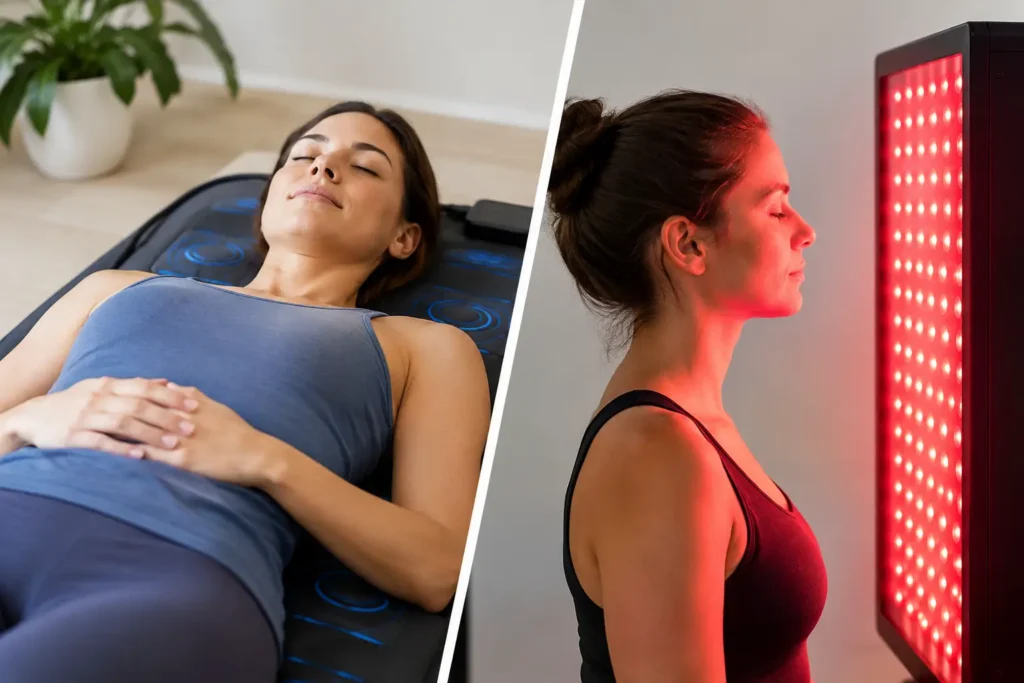
A full-body PEMF mat and a red light panel may both earn a place in a serious home wellness routine, but they do not deliver the same experience. The PEMF versus red light therapy decision is less about declaring one technology the winner and more about matching the tool to your priorities, lifestyle, and desired level of whole-body support.
For buyers considering a premium wellness investment, that distinction matters. One system may become part of a daily wind-down routine, while another is used for focused sessions before or after activity. Understanding how each approach works can prevent an expensive purchase from becoming equipment that sits unused.
PEMF Versus Red Light Therapy: The Core Difference
PEMF stands for pulsed electromagnetic field therapy. A PEMF system delivers carefully controlled electromagnetic pulses through a full-body mat or localized applicator. In a wellness setting, people commonly use PEMF sessions to support relaxation, stress management, sleep habits, mental clarity, and natural recovery routines.
Red light therapy uses visible red and near-infrared wavelengths of light delivered from a panel, handheld device, wrap, or mask. The light is directed toward the body, typically at a relatively close distance, for targeted wellness and cosmetic routines.
The simplest distinction is reach. A full-body PEMF mat creates a passive, immersive session that can support an overall relaxation routine from head to toe. Red light therapy is usually more location-specific. Someone may position a panel near their legs after a demanding workout, use a facial device as part of skin care, or target a particular area with a handheld unit.
Neither modality needs to replace the other. Some wellness-focused households use both, but they serve different purposes and demand different habits.
What a PEMF Session Feels Like
A quality PEMF session is designed to fit into real life. You lie on a mat, sit with an applicator, or use a localized attachment while reading, resting, meditating, or preparing for sleep. Many users describe the appeal as simple: there is no need to hold a device in place or arrange their body in front of a light panel for every session.
This makes PEMF especially compelling for people who want a consistent whole-body ritual. The iMRS Prime, for example, combines a full-body PEMF mat with guided program options and can be configured with relaxation-oriented features such as FIR and sound-and-light components. For a buyer building a dedicated recovery or relaxation space at home, that integrated approach can feel more complete than adding separate devices over time.
PEMF systems also vary dramatically in sophistication. Frequency range, intensity settings, waveform design, polarity switching, applicator options, program guidance, materials, and electrical safety standards are not minor details. They shape how flexible the system is and how confidently you can build a repeatable routine around it.
What Red Light Therapy Does Best
Red light therapy is often attractive because it is visual, direct, and easy to understand. You stand or sit near a panel, expose the desired area, and complete a timed session. Compact devices can also work well for people with limited space or those who want a portable tool for a focused routine.
Its strongest practical advantage is targeted use. If your priority is a specific body area, a red light device can be convenient and efficient. It is also popular among people who already have established skin-care, fitness, or post-exercise habits and want to add a short light session to an existing routine.
That convenience comes with trade-offs. A panel requires appropriate positioning, eye-safety awareness, and enough open space to use comfortably. Coverage depends on the size of the device and your distance from it, so a small panel may require multiple positions to address several areas. The quality of LEDs, irradiance claims, wavelength selection, heat management, and timer controls deserve close attention before buying.
Which Is Better for Sleep and Stress Routines?
For sleep habits and stress management, PEMF often has the more natural fit because the format encourages stillness. A 20- to 30-minute mat session can become a reliable boundary between a demanding workday and the evening. It does not require you to stand in front of a bright device or concentrate on positioning.
That does not mean red light has no place in a nighttime routine. Some people prefer red-spectrum light because it feels less stimulating than bright, cool household lighting. However, device brightness, timing, and personal sensitivity all matter. A red light panel is not automatically a better bedtime choice simply because it uses red wavelengths.
If your main goal is to create a calm, repeatable ritual that supports relaxation and better sleep habits, a full-body PEMF system is usually the more versatile starting point. If your goal is a short, area-specific addition to a larger wellness plan, red light may be the more direct choice.
The Investment Question: Device Quality and Support
The biggest purchasing mistake is comparing a premium PEMF system with an entry-level red light device only by price. These categories are built differently, used differently, and supported differently. A better comparison asks what you will actually use three, six, and twelve months from now.
A premium PEMF system can be a significant investment, so buyer support is part of the product value. You should know how to select programs, adjust settings, use each applicator, establish a sensible schedule, and understand any safety considerations. For many buyers, personal onboarding is what turns complex technology into a practical daily tool.
At iMRS2000.com, the emphasis is not simply on selling a system. It is on helping buyers choose between configurations, learn the equipment one-on-one, and receive continued guidance after purchase. That level of support is particularly valuable for first-time PEMF users who do not want to guess at protocols or navigate a sophisticated system alone.
Red light devices also benefit from good education, especially around session distance, duration, protective eyewear when appropriate, and realistic expectations. Still, their operating process is generally simpler. If you prefer a single-purpose device with fewer settings, that may be a meaningful advantage.
Can You Use PEMF and Red Light Together?
Many people can incorporate both into a broader wellness lifestyle, provided they follow each device manufacturer’s instructions and any guidance from their licensed health professional. A PEMF session may support a quiet whole-body reset, while red light can be used separately for an area-specific routine.
There is no need to force both technologies into the same session. Consistency matters more than stacking gadgets. Start with the tool that best addresses your primary goal, use it long enough to establish a habit, and assess whether a second modality would add genuine value.
If you have an implanted electronic device, are pregnant, have a photosensitivity concern, take medications associated with light sensitivity, or have a medical condition under care, speak with your physician before using either technology. These are wellness tools, not a substitute for diagnosis, treatment, or medical advice.
How to Choose Without Overbuying
Choose PEMF when you want a full-body, low-effort experience that can support relaxation, recovery routines, sleep habits, and overall wellbeing. It is especially well suited to people who value guided protocols, adjustable settings, and the ability to use a mat while resting.
Choose red light therapy when your priority is a targeted, visual, and typically shorter session. It can be a practical fit for someone with a defined area-focused routine, limited interest in system customization, or a preference for a compact device.
Choose both only when each has a clear job in your routine. More technology is not automatically better. The best investment is the one you understand, enjoy using, and can maintain consistently.
Before making a high-ticket decision, think beyond specifications. Ask where the device will live, when you will use it, who will help you learn it, and whether its format fits your daily rhythm. A wellness system should make your routine easier to keep – not add another complicated task to your schedule.
