
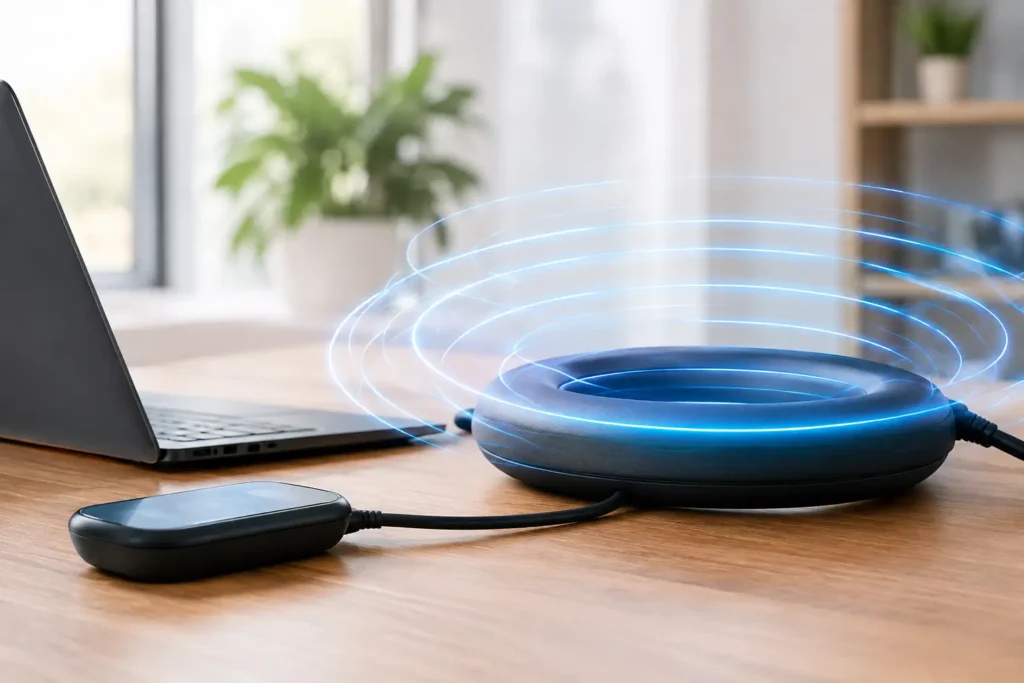
A premium PEMF system belongs in the real world, not in an empty laboratory. It may sit beside a bed, in a home office, or in a busy wellness practice surrounded by phones, Wi-Fi equipment, chargers, lighting, and other electronics. Understanding PEMF electromagnetic compatibility helps you create a confident setup that respects both your wellness routine and the technology already in your space.
For many buyers, electromagnetic compatibility sounds like a technical detail buried in a manual. In reality, it is a practical part of choosing and using a sophisticated wellness system well. It affects placement, power connections, nearby devices, and the steps you take if an electronic device behaves unexpectedly.
What PEMF Electromagnetic Compatibility Means
Electromagnetic compatibility, often called EMC, describes two related questions. First, does a device operate as intended in its electromagnetic environment? Second, does it avoid creating unwanted interference for other equipment nearby?
A PEMF system intentionally generates pulsed electromagnetic fields through a mat or localized applicator. That is its designed function. EMC is not about suggesting that every field-producing device is a problem. It is about engineering, testing, installation, and sensible use so the system can perform as designed without unnecessarily disrupting nearby electronics.
This distinction matters when comparing premium systems. A high-quality PEMF platform is more than a mat and a control unit. Its electronics, cabling, power supply, shielding approach, and design standards all contribute to reliable operation. For a high-value wellness investment, these details deserve more than a quick glance at a frequency or intensity number.
EMC Is Different From Personal Suitability
Electromagnetic compatibility is often confused with health or medical safety. They overlap only in the sense that both call for thoughtful use. EMC concerns how equipment interacts with other equipment. Personal suitability concerns whether a particular individual should use the system.
If you have an implanted or wearable electronic medical device, such as a pacemaker, implanted defibrillator, neurostimulator, insulin pump, or cochlear implant, do not assume home placement rules answer the question. Follow the PEMF manufacturer’s contraindications and instructions, and seek guidance from the clinician responsible for the implanted device before use. The same caution applies when a health professional has advised you to avoid electromagnetic exposure.
PEMF wellness systems are not medical devices unless specifically cleared or approved for a medical purpose. They are designed to support non-medical wellness goals such as relaxation, sleep routines, stress management, and natural recovery habits. Clear boundaries make for more confident ownership.
Where You Place Your PEMF System Matters
Most homeowners do not need to redesign an entire room to use PEMF. They do need a clean, sensible operating area. Start with the manufacturer’s instructions for the controller, applicators, connectors, and required clearances. Those instructions take priority over general advice because system designs vary.
Place the control unit on a stable, dry surface with ventilation around it. Avoid stuffing it into a closed cabinet, laying it on a bed where vents can be covered, or placing it directly beside a heat source. Keep drinks, humidifiers, and other moisture sources away from electronic controls and power connections.
For the mat or applicator, avoid routing cables under heavy furniture, pinching them in adjustable bed frames, or sharply bending them near connectors. Cable damage can affect performance and may create reliability issues over time. A dedicated path along the edge of a room or under a protective cable cover is often a better long-term choice than repeatedly moving the cable after every session.
Distance is a useful tool. If a phone, radio, speaker, baby monitor, smartwatch charger, or other electronic device is behaving unusually during a session, move it farther away before assuming there is a defect. Do not place sensitive electronics directly on a PEMF mat or applicator unless the manufacturer specifically says it is acceptable.
Power Quality Can Affect Every Electronic System
The electrical outlet is part of your setup. Use the supplied power components and connect the system to a properly grounded outlet when the instructions call for it. Avoid overloaded extension cords, worn power strips, loose outlets, or daisy-chained surge protectors. These are poor practices for any premium electronic equipment, not just PEMF systems.
A quality surge protector may make sense in areas with unstable power or frequent storms, provided it is compatible with the system’s instructions. If your home has recurring flickering lights, tripped breakers, or unexplained power fluctuations, address the electrical issue rather than expecting a wellness device to work around it.
Travel also changes the equation. Electrical standards, outlet types, and voltage can differ outside the United States and Canada. Use only approved adapters or converters when required by the manufacturer. An incorrect power arrangement can damage equipment and may void warranty coverage.
Everyday Electronics: What to Watch For
Modern homes contain many wireless and electronic products, and most will coexist normally when used sensibly. Still, some devices deserve a little extra attention. Keep the PEMF controller and applicator cables away from radio antennas, cordless-phone bases, Wi-Fi routers, and charging stations when possible. A little separation is easy insurance against avoidable troubleshooting.
If you use a computer during a PEMF session, do not rest the laptop on the mat or place the controller against the computer. Use a desk or side table instead. The same common-sense approach applies to external hard drives, credit cards with magnetic strips, key fobs, and audio equipment. The goal is not fear. It is preserving the intended operating environment for each item.
Be methodical if you suspect interference. Turn the PEMF system off, then check whether the other device returns to normal behavior. Move the devices farther apart, inspect cables and power connections, and test again. If the issue repeats, stop using that particular arrangement and contact the PEMF provider or manufacturer’s support team with the device model, setup details, and what occurred.
Why System Design and Support Matter
A low-cost device may appear comparable if you only compare a few headline specifications. Yet electromagnetic compatibility is one example of why a premium system should be evaluated as a complete platform. Build quality, manufacturer documentation, power design, safety testing, application guidance, and accessible technical support all influence the ownership experience.
With a configurable system such as the iMRS Prime, users may have multiple applicators, programs, and wellness components in one environment. That flexibility is valuable, but it also makes proper onboarding more valuable. You should know how to connect components correctly, where to position the controller, how to store the system, and whom to call when a setup question arises.
Ask a prospective provider direct questions before purchasing. What instructions are included for home placement? What electrical-safety and EMC information does the manufacturer provide? Is individualized training available? Will someone help you troubleshoot a real-world setup involving an adjustable bed, home office, or professional wellness room?
The answers reveal whether you are buying a box or gaining informed support for a long-term wellness technology investment.
A Practical Setup Check Before Your First Session
Before beginning, inspect the mat, applicator, controller, and cables for visible damage. Confirm that every connector is fully seated and that the controller has adequate ventilation. Place mobile phones and other nonessential electronics on a nearby table rather than on the system itself.
Then run your first session in a simple environment. Keep the setup uncluttered, avoid simultaneously charging several devices next to the controller, and observe how the equipment operates. This gives you a reliable baseline. Once you know the system is functioning properly, you can refine the room layout around your routine.
If you operate a wellness practice, document your setup. Label cables, keep the controller away from foot traffic, train staff on power-down procedures, and inspect components between clients. Professional-looking organization is not merely cosmetic. It protects the equipment and makes each session easier to deliver consistently.
A well-designed PEMF routine should feel reassuring, not technically fragile. Give your system a proper place, follow its specific instructions, and use knowledgeable support when questions arise. That small amount of care helps protect a sophisticated wellness tool and lets you focus on the calmer, more restorative habits you intended to build.
