
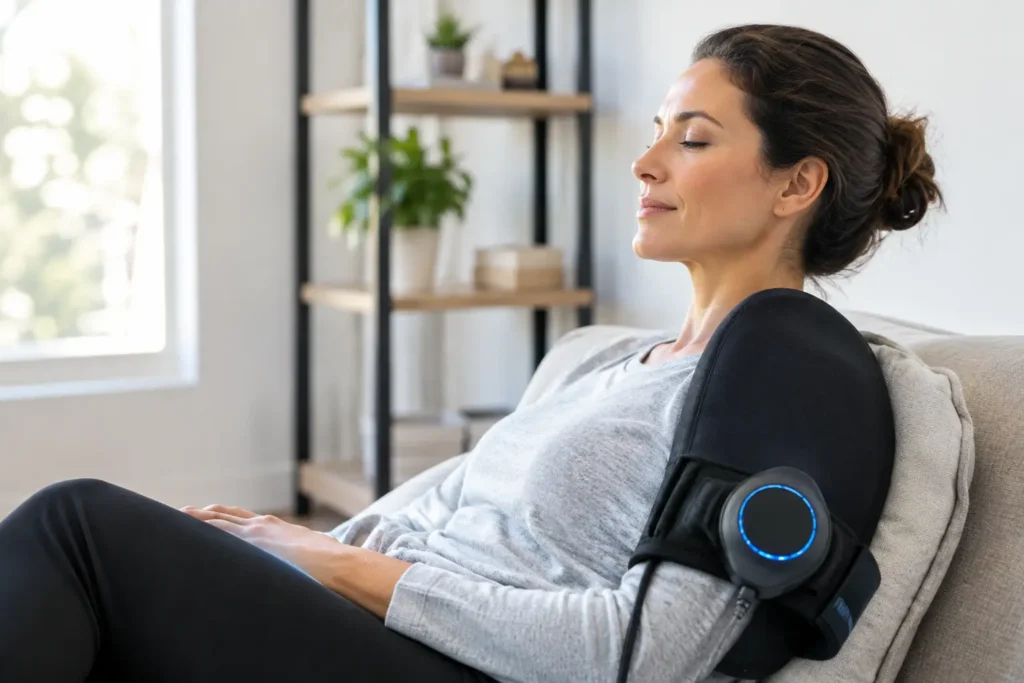
A stiff back after a long flight, sore knees after a walk, or shoulders that refuse to relax at bedtime can change the entire rhythm of a day. Many people looking into PEMF for pain relief are not looking for another complicated routine. They want a non-invasive, at-home wellness tool that supports relaxation, recovery, and the habits that make daily movement feel more manageable.
Pulsed electromagnetic field technology is increasingly part of premium home wellness routines. Still, it deserves a clear-eyed look. PEMF is not a cure, does not diagnose conditions, and should not be presented as a replacement for medical evaluation or treatment. Its value is often more practical: helping users create consistent time for rest, recovery, body awareness, and better sleep routines.
How PEMF for Pain Relief Is Commonly Used
PEMF systems deliver low-frequency electromagnetic pulses through a full-body mat or a targeted applicator. Users lie on the mat or place a local applicator near an area where they want to focus their wellness session. Depending on the system, sessions may also include features such as far-infrared heat, sound, or light-based relaxation programs.
The experience is generally passive. You do not need to exercise, stretch, or learn a difficult technique while using the system. That simplicity matters for people whose discomfort tends to increase when life gets busy and recovery becomes an afterthought.
People commonly build PEMF sessions into a morning reset, a post-workout wind-down, or an evening sleep routine. Some use a full-body mat for broad relaxation; others prefer a focused applicator for a specific region after activity. The best approach depends on the person, the system, and the guidance provided with it.
It is also worth separating the feeling of a session from the long-term purpose of a routine. Some users notice relaxation immediately, while others mainly value the consistency of setting aside time to recover. A premium PEMF system should support both: an easy session experience today and adaptable programs that remain useful as your routine changes.
Why Daily Discomfort Is Rarely One-Dimensional
Pain can have many drivers, including injury, overuse, sleep disruption, stress, inflammation, posture, underlying disease, and emotional strain. That is why promises of a single technology that “fixes pain” should raise questions. No home wellness device can responsibly make that claim.
For many adults, however, discomfort is tied to a cycle that feels familiar. Poor sleep can make the body feel more sensitive. Stress can lead to muscle tension. Less movement can reduce confidence and make normal activity feel harder. Then discomfort makes it difficult to settle down at night. A well-designed PEMF routine may fit into this cycle by supporting relaxation and recovery habits without adding another demanding task.
This is the useful frame for PEMF: not a magic switch, but a supportive wellness modality. When it helps a user consistently make space for rest, gentle movement, hydration, mobility work, and better sleep hygiene, it can become a meaningful part of a broader personal recovery plan.
What a Quality PEMF System Changes
Not all PEMF devices are built for the same purpose. Small, low-cost units may be appropriate for someone who wants occasional localized sessions. A full-body system is a different category of investment. It is designed for people who want a more complete at-home setup, wider coverage, configurable programs, and the ability to use it regularly over years rather than weeks.
When comparing systems, look beyond marketing phrases and ask practical questions. What is the frequency range? Can intensity be adjusted? Does the unit offer polarity switching or multiple waveform options? Is there a full-body mat, a targeted applicator, or both? Are programs simple enough to use confidently, yet flexible enough to match different wellness goals?
Build quality matters, too. A system used in a bedroom, wellness room, or professional practice should feel dependable and comfortable. Materials, mat dimensions, control design, electrical safety standards, and manufacturer support all affect the ownership experience. Technical specifications are not just numbers on a page. They determine how easily the device fits into real life.
For buyers considering a premium system, personalized training may be the feature that protects the investment most. An advanced device with multiple settings can be highly useful, but only when the owner understands how to begin conservatively, choose appropriate programs, and adjust based on comfort and routine. The strongest purchase experience does not end when the box arrives.
Using PEMF Thoughtfully at Home
Consistency usually matters more than intensity. A reasonable starting point is to select a comfortable, low-intensity program and use it at a predictable time of day. Keep the first few sessions simple. Notice whether the routine helps you feel calmer, more rested, or better prepared for gentle movement.
Avoid treating PEMF like a contest. More time or higher settings are not automatically better. If a program leaves you feeling overstimulated, uncomfortable, or unsettled, scale back and seek guidance from the provider or manufacturer. Premium systems should give users room to personalize, not pressure them to push through an unpleasant experience.
A simple journal can be surprisingly valuable during the first few weeks. Record session timing, settings, sleep quality, activity level, and general comfort. This does not turn PEMF into medical treatment, but it can help you identify whether a routine is genuinely supporting your wellness goals or simply adding another item to your schedule.
PEMF is often most useful alongside basics that are easy to overlook: regular sleep and wake times, appropriately paced activity, strength and mobility work when recommended, nutritious meals, and stress-management practices. Technology can support these foundations. It cannot replace them.
Safety and When to Ask Your Clinician
PEMF wellness systems are non-invasive, but non-invasive does not mean appropriate for every person or every situation. Follow the manufacturer’s instructions and product-specific contraindications exactly. People with implanted electronic medical devices, such as pacemakers or insulin pumps, should not use PEMF unless their qualified clinician and the device manufacturer have confirmed it is appropriate.
Pregnancy, active cancer care, a history of seizures, significant heart conditions, unexplained symptoms, recent surgery, and use around medical implants are all reasons to speak with a qualified healthcare professional before beginning. The same applies if pain is severe, sudden, worsening, follows a serious injury, or comes with symptoms such as chest pain, weakness, numbness, fever, unexplained weight loss, or changes in bowel or bladder control. Those are not situations to manage with a home wellness device.
Be especially cautious with marketing that guarantees results or suggests you can stop prescribed care. Responsible PEMF education should explain capabilities, boundaries, and safe-use considerations in plain language. It should leave you more confident, not more confused.
Choosing Support, Not Just a Device
A multi-thousand-dollar PEMF purchase should come with more than a shipping confirmation. Before you buy, find out who will answer questions after delivery, whether one-on-one onboarding is available, and whether the seller can explain the practical difference between full-body and localized applications. Ask how protocols are selected and what help is available if your needs change.
That level of support is particularly important with sophisticated systems such as the iMRS Prime, where users may have access to multiple applicators and wellness features. A knowledgeable team can help match the system to your space, goals, and comfort level while keeping expectations realistic. It can also help you avoid paying for features that do not fit how you will actually use the device.
The right PEMF system is not necessarily the one with the longest feature list. It is the one you understand, feel comfortable using, and can integrate into a sustainable routine. If pain or discomfort has made rest feel out of reach, start with informed questions, conservative use, and support you can rely on long after the purchase.
