
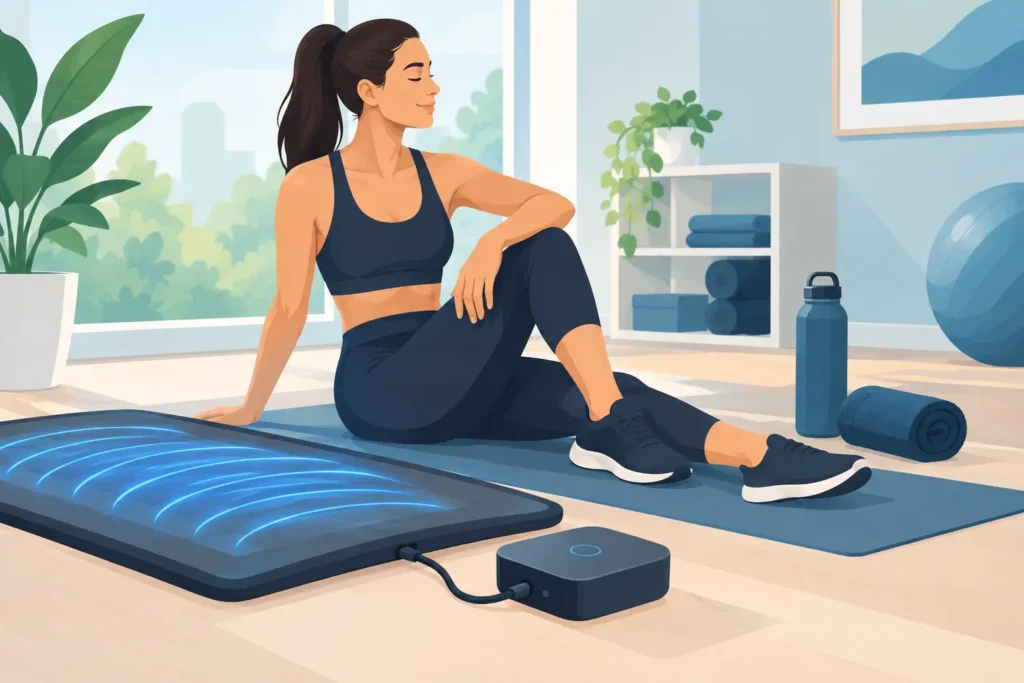
Hard training does not end when the last rep is done. It follows you into the drive home, the afternoon meeting, the quality of your sleep, and the decision to train again tomorrow. A thoughtful PEMF workout recovery routine gives active adults a practical way to create a deliberate transition from exertion to rest, without turning recovery into another complicated project.
For many people, the real value of PEMF is not a dramatic one-time experience. It is the consistency of having a non-invasive wellness tool at home that encourages them to slow down, lie still, breathe, and support the recovery habits that already matter most: sleep, nutrition, hydration, mobility, and sensible training volume.
What PEMF Can and Cannot Do for Workout Recovery
Pulsed electromagnetic field technology, or PEMF, uses carefully controlled electromagnetic pulses delivered through a full-body mat or localized applicator. Wellness users often include it in routines designed to promote relaxation, support healthy sleep habits, and create a calmer state after physical or mental exertion.
That distinction matters. PEMF is not a substitute for clinical care, a diagnosis, physical therapy, or proper programming in the gym. It also cannot compensate for chronic under-eating, poor sleep, excessive alcohol use, dehydration, or repeatedly training through a significant injury. Premium wellness technology works best when it supports a smart foundation rather than being asked to rescue a broken one.
The appeal is straightforward: a quality home system can make recovery time more intentional. Instead of scrolling on the couch after a demanding session, you may spend 20 to 40 quiet minutes on a full-body mat, using that time to downshift before dinner, stretching, or bed. For busy professionals and active households, that structure can be as valuable as the technology itself.
Build Your PEMF Workout Recovery Routine Around Timing
There is no single PEMF protocol that fits every workout, every person, or every system. Training intensity, sleep schedule, goals, sensitivity to stimulation, and the specific settings available on your device all affect the best approach. Start conservatively, follow your system’s instructions, and pay attention to how your body responds over several weeks rather than judging the experience after one session.
Immediately after training: create a downshift
After strength training, endurance work, a long hike, or a demanding sport session, use PEMF when you are ready to transition out of performance mode. Many users choose a gentle relaxation-oriented session after a shower, once they have had water and a post-workout meal or snack.
This is usually not the moment to chase intensity. The goal is to give your nervous system a clear cue that the work is over. Lie comfortably on the full-body mat, keep your phone out of reach, and use slow breathing for the first few minutes. If your system includes sound-and-light relaxation features, use them only if they feel calming and do not interfere with your ability to rest.
A full-body session can be especially convenient after training because it requires no guesswork about which area received the most workload. The legs may feel tired after running, but your back, shoulders, hands, and overall stress load may also benefit from a period of stillness.
Later in the day: support a better evening routine
For many active adults, the best recovery session is not immediately after exercise. It is later, when work is finished and the mind is still replaying the day. An evening PEMF session can become a reliable buffer between a high-output schedule and a consistent sleep routine.
Keep the setting comfortable and the environment quiet. Dim lights, avoid work emails, and consider finishing your session 30 to 60 minutes before bed if that helps you settle. Some people prefer PEMF earlier in the evening, particularly if they feel energized by certain programs. This is why personal guidance and a gradual start matter more than copying someone else’s exact schedule.
On rest days: keep recovery from becoming passive
Rest days are not failed training days. They are where adaptation, restoration, and readiness are supported. A PEMF session on a rest day can pair naturally with easy walking, gentle mobility, hydration, meal preparation, or a short relaxation practice.
The benefit of this approach is behavioral as much as physical. It helps you protect recovery time before soreness, fatigue, or stress pushes you into doing too little or doing too much. If you are highly active, a short consistent practice often makes more sense than saving PEMF only for the days you feel completely depleted.
A Simple Weekly Structure for Active Adults
Use this as a starting framework, not a rigid prescription. Your system’s program guidance should always take priority.
On hard training days, schedule one calming full-body PEMF session after you have rehydrated and eaten. On moderate days, you may use a shorter session later in the day, especially if the goal is relaxation before sleep. On rest days, choose a relaxed full-body session or use a localized applicator as part of your quiet time, according to the device guidance.
If you train early in the morning, avoid creating a recovery routine so long that it becomes another reason to skip it. Ten focused minutes you complete consistently is more useful than an elaborate plan you abandon after a week. If you train at night, prioritize settings and timing that help you wind down rather than making you feel more alert.
Your training log can make this more useful. Alongside sets, mileage, and resting heart rate if you track it, note your sleep quality, perceived soreness, stress level, and how ready you feel for the next session. These are personal wellness observations, not medical measurements, but they can help you recognize patterns and adjust your routine thoughtfully.
Choose Full-Body or Localized PEMF With Purpose
A full-body mat is often the centerpiece of a home PEMF workout recovery routine because it makes daily use remarkably simple. You lie down, choose an appropriate wellness program, and give your entire body a chance to rest. For people balancing demanding training with travel, family, and career obligations, simplicity is a major advantage.
Localized applicators have a different role. They can be useful when you want a more targeted relaxation session around an area that feels especially worked after activity, such as the lower back, hips, shoulders, or legs. The trade-off is that localized use takes more attention to positioning and protocol selection. It should complement, not necessarily replace, a broader recovery practice.
This is also where system quality matters. Frequency range, intensity options, waveform design, polarity switching, applicator construction, program library, and electrical-safety standards can affect both usability and confidence. A premium system is a long-term wellness investment, so ask for clear explanations and individualized training before deciding which configuration fits your routine.
Avoid the Most Common Recovery Mistakes
The biggest mistake is treating PEMF as a permission slip to ignore recovery basics. A session on a mat cannot replace sufficient protein and total calories, quality sleep, mobility where needed, or an intelligent training plan. It belongs beside those habits.
The second mistake is starting too aggressively. More time and higher settings are not automatically better. Begin with conservative settings, especially if you are new to PEMF, and let comfort and consistency guide the process. If you experience an unexpected response, stop the session and consult the product guidance or a qualified health professional as appropriate.
Finally, do not overlook safety. Follow all manufacturer instructions and contraindications. People with implanted electronic devices, those who are pregnant, or anyone with a medical condition or concern should speak with a qualified healthcare professional before using PEMF. These systems are intended for general wellness use and are not designed to diagnose, treat, cure, or prevent disease.
Get the Setup Right Before You Need It
The best routine is the one that is easy to repeat after a long day. Keep your mat in a dedicated, comfortable place rather than stored in a closet. Set up a water bottle nearby. Decide in advance whether your usual session happens after training, before bed, or on rest-day mornings. Remove friction wherever you can.
For a premium PEMF system, personal onboarding is not an extra. It is part of using the investment well. At iMRS2000.com, individualized training can help owners understand program choices, applicator use, and how to establish a realistic wellness routine around their actual lifestyle. That level of support is especially valuable when you are comparing advanced systems and want more than a manual.
Give your recovery practice enough time to become familiar. The quiet session after training may become the most protected part of your week: a small, repeatable signal that your body has done the work and now has permission to rest.
