
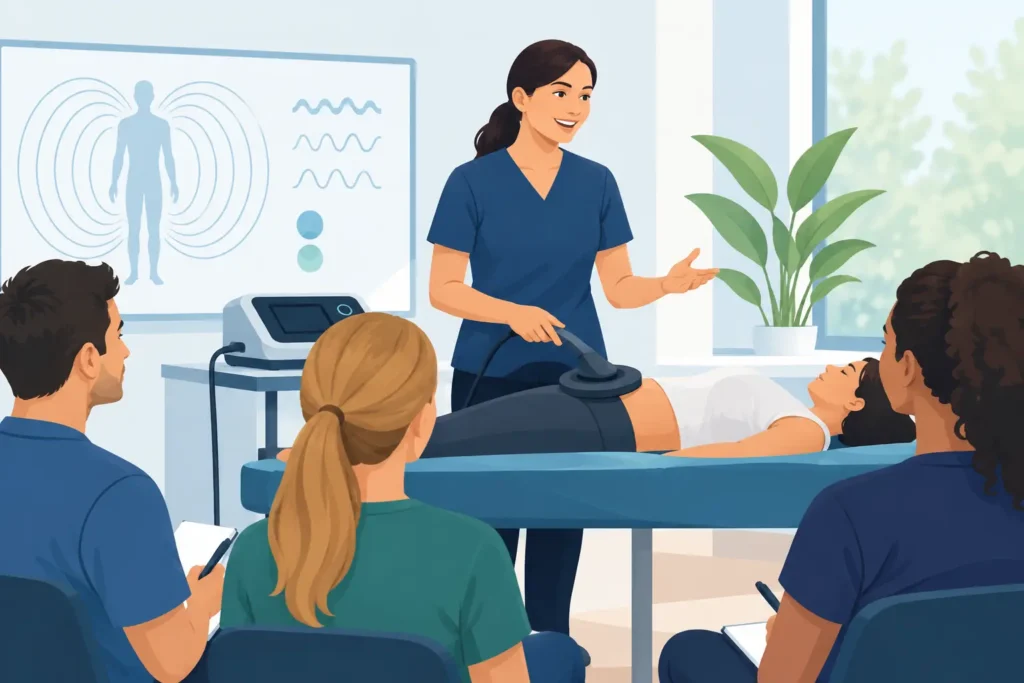
A PEMF system can look deceptively simple: select a program, position the applicator, and begin a session. But for a wellness professional, the real value is not in pressing a button. It is in knowing why a setting is appropriate, how to communicate realistic wellness expectations, and when to pause and seek further guidance. The best PEMF practitioner training courses turn a sophisticated technology purchase into a confident, responsible client experience.
For practitioners adding PEMF to a wellness studio, recovery-focused practice, coaching business, or home-based service, training should be part of the investment from the beginning. A premium system deserves more than a quick product demonstration. You need a practical education that helps you understand the equipment, apply manufacturer-guided protocols, and support clients without overstating what a wellness device can do.
What Practitioner Training Should Actually Teach
A strong training program starts with the fundamentals, but it should not stay theoretical. You should understand pulsed electromagnetic fields in plain language, including the relationship between frequency, intensity, waveform, session duration, and applicator placement. These settings are not interchangeable. A full-body mat session for evening relaxation may call for a different approach than a localized session intended to support a post-workout recovery routine.
Good instruction also explains the design of the specific system you will use. A practitioner should know the purpose of the full-body mat, localized applicators, and any integrated features such as far infrared, sound, or light-based relaxation options. When a client asks what each component does, “the manual says so” is not a sufficient answer. Clear product knowledge creates trust.
The strongest courses also teach protocol logic. That does not mean giving every client the same setting because it is convenient. It means learning how manufacturer-developed programs are organized, how to begin conservatively, how to document client feedback, and how to adjust within the system’s intended wellness use. Consistency matters, particularly when clients return for recurring sessions and expect a professional process.
Safety Education Is the Non-Negotiable Standard
PEMF is positioned as a non-invasive wellness technology, but responsible use still requires screening and sound judgment. Any course worth your time should cover manufacturer contraindications, precautions, device instructions, and when a client should consult a licensed healthcare professional before using the system.
Training should make it clear that practitioners do not diagnose conditions, prescribe treatment, or promise medical outcomes. That boundary protects the client and protects your business. You can discuss relaxation support, sleep habits, stress management, comfort, and natural recovery routines in appropriate wellness language. You should not present PEMF sessions as a replacement for medical care or as a cure for disease.
Ask how the course handles real-world situations. Does it provide an intake framework? Does it explain how to respond if a client reports a new symptom, has an implanted electronic device, is pregnant, or has a medical history that raises questions? A polished certificate means little if the training skips these essential conversations.
Look for Device-Specific, Not Generic, Instruction
There is a difference between broad PEMF education and training on the system sitting in your treatment room. General education can be useful, especially if you are comparing technologies. Yet it cannot replace device-specific instruction on controls, programs, accessories, cleaning, setup, storage, and troubleshooting.
This matters because PEMF systems vary widely. Frequency range, intensity, waveform, polarity options, applicator construction, and guided programs can all differ. A practitioner trained only on a basic portable device may not be prepared to use a premium full-body system with multiple applicators and wellness configurations.
For example, iMRS2000.com provides education centered on the iMRS ecosystem, helping owners understand how to use their system’s features rather than leaving them with generic concepts and unanswered questions. That type of hands-on, system-focused support is especially valuable for a practitioner who has invested thousands of dollars in professional-quality equipment.
The Best PEMF Practitioner Training Courses Include Practice
Knowledge becomes useful when you can apply it while a real person is on the mat. Look for a training format that includes demonstrations, sample client scenarios, and the opportunity to ask questions about your specific setup. Video instruction can be effective, but one-on-one phone or video guidance often makes the difference between feeling informed and feeling fully prepared.
Practical training should cover the full client journey: preparing the space, explaining the session, positioning the client comfortably, selecting a suitable manufacturer-guided program, monitoring the experience, and documenting what was used. It should also address the moments that are easy to overlook, such as how to explain sounds from the unit, what clients may reasonably expect during a relaxing session, and how to set expectations before the first appointment.
A course that includes follow-up support has a major advantage. Questions rarely appear only during training. They arise after you begin using the equipment with different clients, different goals, and different schedules. Ongoing access to knowledgeable product support can be more valuable than an impressive-looking one-day certificate.
Credentials Matter, But Scope Matters More
Many professionals ask whether they need a PEMF certification before offering sessions. The answer depends on your location, your existing professional credentials, your insurance requirements, and how you describe your services. There is no single credential that automatically grants permission to make medical claims or operate outside your established scope of practice.
Before enrolling, ask whether the course provides a certificate of completion, whether it has assessment requirements, and what that certificate represents. A completion certificate can demonstrate that you received product and safety education. It is not necessarily a state license, clinical qualification, or medical credential.
If you are a massage therapist, fitness professional, health coach, spa owner, or recovery specialist, review your state rules and professional insurance policy. Keep your service descriptions aligned with your legal scope and the manufacturer’s non-medical wellness positioning. The most professional practitioners are not the ones making the biggest promises. They are the ones who use thoughtful language, clear consent, and disciplined boundaries.
Questions to Ask Before You Enroll
Course marketing can make nearly every program sound comprehensive. A few direct questions will quickly reveal whether the education is built for serious practitioners or simply designed to close a sale.
Ask whether the training is specific to the model you own or plan to purchase. Find out who teaches it and whether they have direct experience with the equipment. Confirm that safety guidance, contraindications, client communication, and protocol selection are included. Finally, ask what happens after the course: Can you contact someone for technical or usage questions, and is there a clear path for additional training as you become more experienced?
Price deserves consideration, but it should not be the deciding factor. A lower-cost course may cover basic terminology, while a higher-support program may include live orientation, detailed protocol education, and ongoing access to a knowledgeable team. For a practitioner building a premium service, that difference can affect client confidence, operational consistency, and the return on your equipment investment.
Build a Practice Clients Can Trust
PEMF can be a compelling addition to a modern wellness practice because it gives clients a quiet, technology-forward way to support relaxation, recovery routines, and personal wellbeing. Still, the equipment alone does not create a professional experience. Your preparation does.
Choose training that respects the technology, teaches the limits of wellness practice, and gives you direct access to real support when questions arise. When you can explain your system clearly, use it carefully, and guide clients without hype, you are not simply offering another session. You are creating the informed, high-touch experience that makes a premium wellness service worth returning to.
