
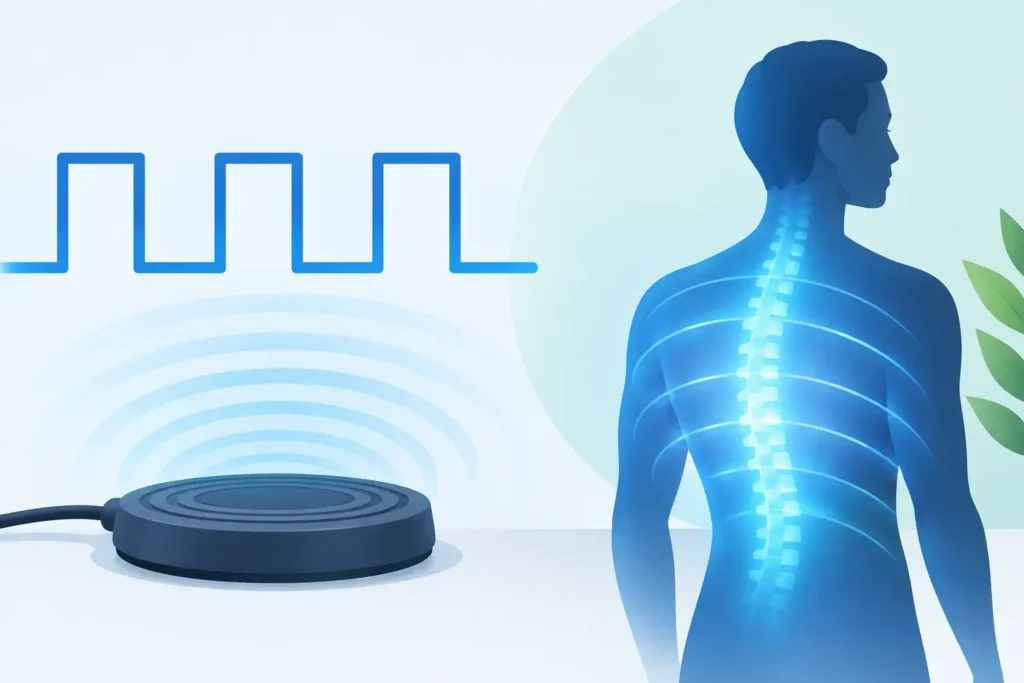
A square wave PEMF waveform can look like a small technical detail on a specification sheet. It is not. Waveform shape influences how a PEMF system delivers its magnetic pulses, how sharply the field changes, and how a protocol feels in real-world use. For anyone investing in a premium home wellness system, understanding this term helps separate meaningful engineering from marketing noise.
What Is a Square Wave PEMF Waveform?
A waveform is simply the shape of an electrical signal over time. Because a PEMF device uses electrical current to create a changing magnetic field, the current pattern affects the magnetic pulse produced by the applicator.
In a square wave PEMF waveform, the signal rises quickly to a set level, holds that level briefly, then drops quickly back down. On a graph, it resembles a series of flat-topped blocks. That is very different from a sine wave, which rises and falls smoothly in a rounded pattern.
The name can be misleading because no real-world electronic pulse is perfectly square. Every device has some rise time and fall time, meaning it takes a small amount of time for the pulse to reach full output and return to baseline. Still, when a system is described as using a square wave, it generally means the pulse transitions are comparatively fast and the signal spends a defined period at its selected amplitude.
For the user, that engineering choice is not automatically better or worse. It is one part of a larger delivery system that includes intensity, frequency, pulse width, polarity, applicator design, session duration, and the quality of the programmed protocol.
Why Waveform Shape Matters in PEMF
PEMF systems create a time-varying magnetic field. A static magnet may have a measurable magnetic field, but it does not create the changing field that defines pulsed electromagnetic field technology. The pace and shape of that change are central to the device’s operation.
A square-style pulse creates relatively rapid transitions. From an engineering perspective, the fast change can produce a broad mix of frequency components compared with a smooth sine wave at the same repeating frequency. This is why waveform discussions sometimes become highly technical very quickly.
Yet the practical decision should remain grounded. A waveform alone does not tell you how deeply a field reaches, how comfortable a session will be, or whether a device is a good fit for your wellness goals. Those outcomes depend on the complete system design and how the system is used.
A premium PEMF system should give you more than one impressive specification. Look for thoughtful protocol design, controlled output, a well-built full-body mat or localized applicator, clear operating instructions, and access to real training after the purchase. Sophisticated technology is far more valuable when you know exactly how to use it consistently.
Fast Edges, Pulse Width, and Field Delivery
The rising and falling edges of a square wave are often the most discussed feature. A fast edge means the current changes rapidly. That rapid change is what contributes to the changing magnetic field.
Pulse width matters as well. It refers to how long the pulse remains active. Two devices might both be described as square-wave PEMF systems, but one could use very brief pulses while another uses longer pulses, different repetition rates, or alternating polarity. They may operate very differently despite sharing the same broad waveform label.
Intensity must also be interpreted carefully. A headline intensity number without context can be incomplete. Ask where the measurement was taken, which applicator was used, whether the number represents peak or average output, and how the system controls that output across a session.
Square Wave vs. Sine Wave PEMF
A sine wave transitions smoothly and continuously. A square wave transitions more abruptly. Neither description is a universal quality ranking.
Sine-wave systems may be favored in certain designs because of their smooth, predictable pattern. Square-wave or pulse-based designs may be chosen where the manufacturer wants defined pulse timing and sharper field changes. Other systems use modified square waves, sawtooth shapes, burst patterns, or proprietary combinations that change over the course of a program.
The right question is not, “Is square wave always superior?” It is, “How does this waveform fit into the device’s complete protocol and intended use?” A manufacturer should be able to explain the waveform in plain English, provide meaningful specifications, and show you how frequency, intensity, and session length are selected.
Be cautious when a seller claims that one waveform guarantees a medical outcome or makes every other PEMF design obsolete. PEMF wellness systems are not interchangeable, but wellness technology also should not be sold with promises that outrun the evidence or its intended non-medical use.
What You May Notice During a Session
Most people do not “feel” a magnetic field in the way they feel heat, pressure, or vibration. With a full-body PEMF mat, the experience is typically quiet and passive. If a system also includes far infrared warmth, sound programs, or light-based relaxation features, those components may be more noticeable than the PEMF pulses themselves.
That can create confusion. Feeling very little does not mean a system is inactive, and feeling more does not prove a system is more effective. The best approach is to follow the device guidance, begin conservatively, and pay attention to comfort, relaxation, and how the routine fits into your day.
For many home users, the real value is consistency. A 20- to 30-minute session that becomes part of an evening wind-down, post-exercise recovery routine, or quiet break between demanding workdays can be more realistic than a complex protocol that never gets used.
How to Compare PEMF Systems Beyond the Waveform
Waveform deserves attention, but it should not dominate your purchase decision. When comparing a premium full-body PEMF system, consider the full architecture of the experience.
First, examine the frequency range and whether the device offers guided programs rather than leaving you to guess. Frequency selection is one of the areas where new owners can become overwhelmed, especially when online discussions offer conflicting advice.
Second, compare intensity controls and applicator options. A full-body mat supports broad relaxation and wellness routines, while a localized applicator may be useful when you want a more targeted setup. The physical construction of the mat, cabling, controls, and accessories also matters when you are making a long-term investment.
Third, ask about polarity. Some systems use polarity switching or other programmed variations. As with waveform shape, this is a design consideration that makes the most sense when it is part of a coherent protocol rather than an isolated sales claim.
Finally, evaluate the human support behind the equipment. A detailed manual is helpful. Personal onboarding, product-selection guidance, protocol education, and responsive post-purchase assistance are better. High-end wellness technology should come with high-level education.
Using Square-Wave PEMF Technology Responsibly
Start with the manufacturer’s instructions and recommended introductory settings. More intensity or longer sessions are not automatically the smarter choice. A measured start gives you an opportunity to establish a comfortable routine and understand the system’s controls.
PEMF devices should also be used within their stated safety guidance. If you have an implanted electronic medical device, are pregnant, have a significant health concern, or are unsure whether PEMF is appropriate for you, consult a qualified healthcare professional and the device manufacturer before use. Never use wellness technology as a replacement for medical diagnosis, treatment, or urgent care.
For buyers comparing advanced systems, this is where expert guidance makes a tangible difference. At iMRS2000.com, the focus is not simply on handing you a sophisticated device and hoping you figure it out. It is on helping you understand your system, establish a practical wellness routine, and receive the training needed to use its features with confidence.
The Better Question to Ask Before You Buy
A square wave PEMF waveform is worth understanding because it tells you something real about pulse design. But it is not the whole story, and a single waveform term should never make the decision for you.
Choose a system whose specifications are clearly explained, whose protocols match your wellness priorities, and whose support team will still answer when you have questions after delivery. The most valuable PEMF system is the one you can use comfortably, consistently, and confidently as part of your long-term wellness routine.
