
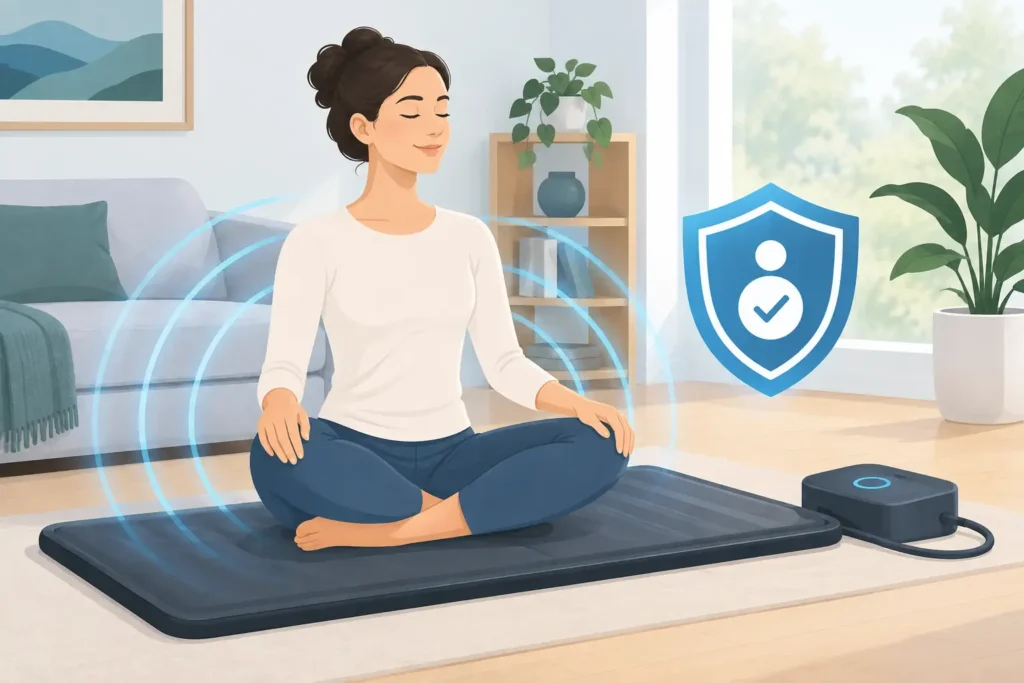
A premium PEMF system belongs in a thoughtful wellness routine, not a guess-and-go experiment. The strongest approach to PEMF safety for home use is straightforward: choose a properly designed system, understand who should not use it, begin conservatively, and follow the manufacturer’s instructions for your exact applicator and program.
That may sound less exciting than chasing the highest setting on day one. It is also how confident owners get the most from a sophisticated wellness investment. PEMF is non-invasive, but it is still an active technology. Your settings, health history, device placement, and consistency all matter.
PEMF Safety for Home Use Begins Before Your First Session
A quality home PEMF system should provide clear operating instructions, defined program options, and support from people who understand the equipment. This is especially relevant when comparing premium systems with full-body mats, localized applicators, FIR features, or sound-and-light relaxation components. More options can create a more flexible routine, but they also make proper onboarding more valuable.
Start by reading the owner’s manual rather than relying on a social-media protocol or a friend’s routine. Frequency, intensity, session length, and applicator type can differ substantially between systems. A setting that feels appropriate on one device is not automatically appropriate on another.
Use the system exactly as directed. Place the mat or applicator on a stable, dry surface, inspect cables and connectors before use, and keep the control unit well ventilated. Do not modify cables, use damaged accessories, or operate the device near water unless the manufacturer specifically states that it is designed for that environment.
Electrical safety matters, too. Plug the system into an appropriate outlet, avoid overloaded power strips, and keep cords where they will not create a trip hazard. If your unit has an FIR heating feature, follow its specific heat and placement instructions. Heat adds another variable, particularly for people with reduced sensation, circulation concerns, or a tendency to fall asleep during relaxation sessions.
Who Should Pause and Ask a Clinician First?
PEMF wellness devices are not a substitute for medical care, diagnosis, or treatment. They are designed to support relaxation, stress management, sleep habits, and natural recovery within their stated wellness use.
The most responsible first step is to review the manufacturer’s contraindications and warnings for the exact system you own or are considering. In general, individuals with implanted electronic medical devices, such as pacemakers, defibrillators, neurostimulators, insulin pumps, or implanted medication pumps, should not use PEMF unless their treating clinician and the implant manufacturer have confirmed it is appropriate. Electromagnetic fields can potentially interfere with electronic implants, so this is not an area for assumptions.
Pregnancy is another situation where a conservative approach is appropriate. Many PEMF system manufacturers advise against use during pregnancy because sufficient safety data for elective home wellness use may not be available. Follow the specific device guidance and speak with your qualified healthcare professional.
If you have a significant medical condition, are receiving active treatment, have recently had surgery, experience unexplained symptoms, or take medications that affect sensation, blood pressure, or seizure threshold, ask your clinician before beginning. People with a history of seizures should be particularly careful with systems that include light or sound features, since flashing lights may be unsuitable for some users.
A clinician’s advice does not need to turn a wellness decision into something intimidating. It simply helps you account for the factors no product brochure can know about your personal health history.
Keep Your Healthcare Team in the Loop
Be direct when you ask. Tell your clinician that you are considering a pulsed electromagnetic field wellness system, how you plan to use it, and whether it includes heat, light, or sound functions. Bring the product’s technical information and contraindication list if needed.
Do not use a PEMF session to delay care for severe pain, chest pain, sudden weakness, shortness of breath, significant swelling, fever, or new neurological symptoms. Those situations require medical evaluation, not a longer session on the mat.
Start Low, Observe, Then Adjust
For most new users, the smartest protocol is not the most aggressive one. Begin with a lower-intensity setting or an entry-level program, use a shorter session, and see how you feel over the next day. This gives you a clean baseline and reduces the chance that you will confuse a normal adjustment period with a setting that simply does not suit you.
Some users report feeling deeply relaxed or sleepy after a session. Others may notice temporary sensations such as warmth, tingling, mild lightheadedness, headache, or fatigue. These experiences are not guaranteed, and they should not be ignored. Stop the session if you feel unwell, and do not continue a program that repeatedly causes discomfort.
It is also wise to avoid your first session immediately before driving, operating equipment, or handling a demanding work task. A relaxation-focused program may be better suited to an evening wind-down routine or a time when you can remain seated or lying down afterward.
Track your routine for the first few weeks. Note the program, intensity, duration, applicator used, time of day, and your response. A simple record helps you identify what supports your goals without constantly changing multiple settings at once.
Safe Placement and Practical Home Habits
Full-body mats make it easy to create a consistent routine, but convenience should not lead to careless use. Set up your space where you can lie down comfortably and get up safely. If you are prone to dizziness, sit up gradually after a session and drink water if that is already part of your normal routine.
For localized applicators, follow the placement diagrams and timing guidance supplied with your device. Do not place an applicator over an implanted electronic device, and do not improvise with placements that the manual does not support. More direct contact or longer exposure is not automatically better.
Avoid using your system while sleeping unless the manufacturer specifically permits that use and you understand the program duration and any heating considerations. A timed relaxation session is very different from unattended, all-night use.
Households with children should treat a PEMF device like any other advanced wellness equipment. Store controllers and accessories securely, supervise use, and prevent children from playing with cords, applicators, or settings. Pets should also be kept away from cables and heated surfaces.
If you share your system, each person needs their own safety review. One household member’s comfortable setting may be inappropriate for another person, especially when health conditions, implants, medication use, and sensitivity differ.
Device Quality and Training Are Part of Safety
Not all PEMF systems offer the same engineering, documentation, or support. A low price does not tell you whether a device has meaningful controls, clear contraindications, reliable construction, or a team available to answer setup questions. For a high-ticket home wellness purchase, the quality of education after the sale is part of the value.
Look for a system with transparent technical specifications, clear user materials, accessible customer support, and a training process that explains the difference between full-body and localized use. You should know how to select a basic program, adjust settings responsibly, care for the equipment, and recognize when to stop and ask for guidance.
This is where one-on-one onboarding can make a genuine difference. At iMRS2000.com, product selection and training are designed to help owners feel comfortable with the system they choose rather than leaving them to sort through advanced features alone. Good support does not replace medical advice, but it can prevent common user errors and make your routine far less confusing.
When to Stop a Session
Stop using the device and seek appropriate advice if you develop concerning symptoms during or after a session, especially chest discomfort, fainting, unusual palpitations, severe headache, sudden weakness, worsening pain, or a reaction that persists. If a cable is frayed, a connector is loose, the unit overheats, or the device behaves unexpectedly, discontinue use until it has been inspected according to the manufacturer’s service process.
For less urgent discomfort, step back before pushing forward. Reduce the intensity or duration only if the manual allows it and you are otherwise cleared to use the system. If the same problem returns, stop using the program and contact product support or your healthcare professional as appropriate.
The goal is not to prove that you can tolerate more. The goal is to build a comfortable, repeatable wellness practice that fits your life.
A well-chosen PEMF system can become a valuable part of a calmer evening, a recovery-minded routine, or a more intentional approach to personal wellbeing. Give yourself the advantage of a careful start, clear boundaries, and knowledgeable guidance. That is how advanced home wellness technology earns its place in your home.
