
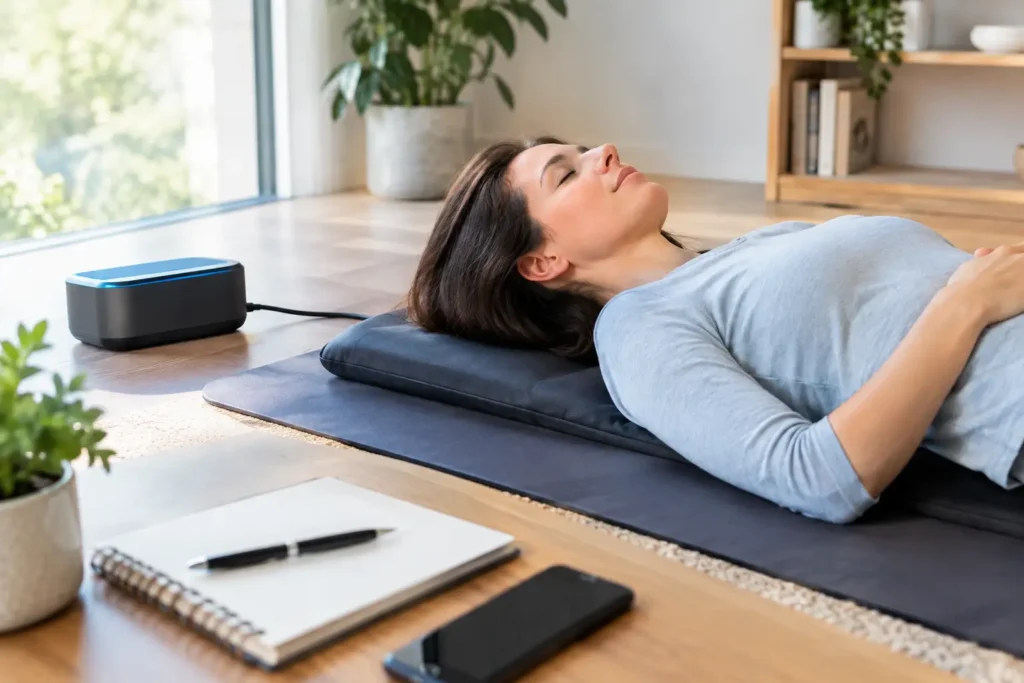
A premium PEMF system is most valuable when it becomes part of a routine you can actually keep. Learning how to schedule PEMF sessions is less about filling every available minute and more about matching your sessions to the times when relaxation, recovery support, and better sleep habits matter most.
For many home users, the best starting point is simple: use the system at a consistent time, begin conservatively, and pay attention to how the routine fits your energy, training schedule, and sleep pattern. Frequency settings, intensity, applicator choice, and session length can all affect the experience, so a personalized plan is far more useful than copying someone else’s calendar.
Start With Your Primary Wellness Goal
Before choosing a schedule, decide what you want the session to support. A person using PEMF as part of an evening wind-down routine may schedule differently than an active adult who wants a calm recovery ritual after training. Someone who travels frequently may need a flexible midday routine, while a wellness practitioner may create different appointment blocks for clients.
Common wellness-focused goals include relaxation, stress management, sleep habits, mental focus, and natural recovery after everyday activity. These are not identical goals, and they do not always call for the same timing. The most effective schedule is the one that supports your lifestyle without becoming another obligation you skip after two weeks.
Avoid treating PEMF as a replacement for medical evaluation, prescribed treatment, medication, sleep hygiene, hydration, nutrition, or appropriate movement. PEMF wellness systems are not intended to diagnose, treat, cure, or prevent disease. If you have a health condition, are pregnant, use an implanted electronic device, or have questions about whether PEMF is appropriate for you, speak with a qualified healthcare professional and follow the device manufacturer’s safety guidance.
How to Schedule PEMF Sessions Around Your Day
A consistent daily anchor is usually the easiest way to build the habit. Rather than asking, “When can I fit in a session?” attach it to something you already do. For example, you might use a full-body mat while reading before bed, during a quiet morning routine, or after you return from a workout.
Morning sessions for a grounded start
A morning session can work well for people who want a quiet, technology-supported transition into the day. Keep the setting calm and practical. Use your chosen program while you plan your schedule, breathe quietly, or spend a few minutes away from screens.
Morning use is not automatically better for everyone. If you personally feel too relaxed afterward, shift the session later in the day. Your response and your ability to stay consistent matter more than following a universal rule.
Midday sessions for demanding schedules
For busy professionals, a midday session can create a useful reset between meetings, caregiving responsibilities, or long periods of desk work. A shorter, consistent session is often more realistic than waiting for a perfect 60-minute window that never arrives.
This is especially helpful when the system is set up where you will genuinely use it. A mat folded away in a closet is less likely to become part of your week than a thoughtfully placed wellness station in a bedroom, office, or dedicated relaxation area.
Evening sessions for relaxation and sleep routines
Evening is a popular time for PEMF because it pairs naturally with other wind-down habits. Reduce bright screens, lower the lights, and make the session part of a repeatable pre-bed ritual. If your system includes sound-and-light relaxation features or FIR options, use them only as directed and according to your personal comfort.
Give yourself enough time after the session to transition into sleep. Rushing from a wellness session into emails, household tasks, or stressful news can work against the calm environment you are trying to create.
Begin Conservatively, Then Build Consistency
The temptation with advanced wellness technology is to use every feature at maximum intensity from day one. That is not a smart way to establish your routine. Start with the recommended introductory settings and session length for your system, then increase only according to the manufacturer’s protocol guidance and your comfort level.
For many users, a practical opening schedule is one session per day or several sessions per week at a consistent time. After an initial adjustment period, you can evaluate whether daily use, split sessions, or a more targeted schedule makes sense. The correct frequency depends on the device, the program selected, your sensitivity, and your broader wellness routine.
Keep the first two weeks uncomplicated. Select one primary time of day and use the same general protocol. Changing intensity, frequency, session duration, applicator placement, and timing all at once makes it difficult to know what is working for you.
Use Full-Body and Localized Sessions Intentionally
A full-body mat is ideal when your goal is a broad relaxation or whole-body wellness experience. It is also convenient because you can lie down comfortably and make the session part of a morning or evening ritual. Full-body sessions often fit best when you have uninterrupted time and want to slow down.
Localized applicators can be easier to schedule around real life. You may use a targeted session while seated at your desk, reading, or resting after activity, always following the manufacturer’s instructions for placement and use. The trade-off is simple: localized sessions can be convenient, but they are not a substitute for the distinct full-body experience a mat provides.
If you own a system with multiple technologies and programs, resist the urge to stack every possible setting into one session. More features do not necessarily create a better routine. Start with the protocol that best matches the moment, then let consistency do the work.
Build a Weekly Plan That Survives Real Life
A session plan should have structure without becoming rigid. Consider your workdays, training days, travel, family responsibilities, and typical bedtime. If evenings are unpredictable, schedule your main session in the morning. If your mornings are rushed, protect a 20- to 30-minute evening window instead.
A realistic week might include regular full-body sessions on most days, with additional localized sessions when your schedule and protocol allow. People with intense training calendars may prefer to make PEMF part of their post-exercise cooldown. Those focused on relaxation may prioritize a predictable evening slot. There is no prize for the most complicated calendar.
When you miss a session, simply return to your normal plan. Avoid the “catch-up” mindset unless your device guidance specifically calls for it. Wellness routines work best when they reduce pressure, not when they create it.
Track Patterns, Not Just Sessions
Keep a brief record for two to four weeks. Note the time of day, program used, session length, intensity level, and a few simple observations: how relaxed you felt, whether the session fit easily into your day, and how it influenced your bedtime routine or post-activity recovery habits.
This is not a medical journal, and it does not need to be complicated. A few notes in a calendar can reveal useful patterns. You may find that a shorter morning session is easier to maintain than a longer evening one, or that you prefer a full-body session on lower-demand days and localized support when your schedule is packed.
Pay attention to comfort. If a setting feels unpleasant or a schedule leaves you overstimulated, tired, or unable to maintain the routine, reduce the intensity, shorten the session, or ask for guidance. Premium systems offer significant flexibility, but that flexibility is most valuable when you use it with intention.
Get Protocol Guidance Before You Guess
High-end PEMF systems can offer a wide range of frequencies, intensities, applicators, and wellness programs. That range is a major advantage, but it can also create uncertainty for first-time owners. Generic advice from forums or social media cannot account for your exact system, its operating instructions, or your individual wellness priorities.
That is why professional onboarding matters. At iMRS2000.com, buyers can receive individualized training and ongoing product support to help organize a confident, practical routine. A knowledgeable specialist can explain the difference between programs, help you understand introductory settings, and make sure you know how to use your investment safely and consistently.
The right schedule is not the most aggressive one. It is the one you can repeat calmly, safely, and confidently until your PEMF system becomes a valued part of the way you care for your daily wellbeing.
