
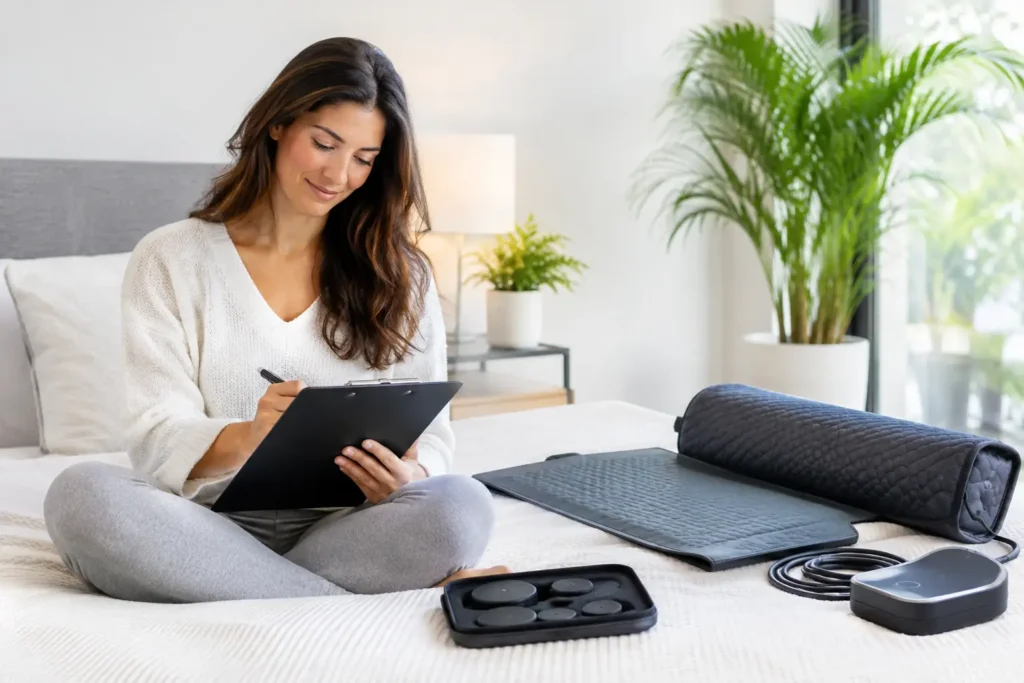
A premium PEMF system is not a casual wellness purchase. It is a long-term investment in your relaxation routine, sleep habits, recovery practices, and daily wellbeing. A serious PEMF quality checklist helps you look beyond attractive claims and compare what actually determines whether a system is appropriate, usable, and supported for years to come.
The right system is not automatically the one with the biggest number on a spec sheet. Frequency range, intensity, applicator design, controls, safety features, and personal training all matter. More importantly, they need to work together in a way that fits how you plan to use the system at home or in a professional wellness setting.
PEMF Quality Checklist: Start With the System’s Purpose
First, clarify what you expect from your system. Some buyers want a simple localized applicator for targeted wellness sessions. Others want a full-body mat they can use while resting, reading, or building an evening wind-down ritual. A practitioner may need flexible applicators and repeatable settings for a broader range of clients.
This matters because a small, entry-level device and a premium full-body system are not interchangeable. A localized unit may be a sensible choice when portability and budget are the priority. A full-body mat can make more sense when consistent, whole-body relaxation support is the goal. Do not pay for capabilities you will not use, but do not choose a limited device only to outgrow it six months later.
Evaluate Frequency Range and Intensity Together
Two specifications often dominate PEMF marketing: frequency and intensity. They are relevant, but neither tells the entire story alone.
Frequency is measured in hertz, or Hz, and describes how often the electromagnetic pulses occur. Premium wellness systems may offer low-frequency programs designed to support relaxation, daily recovery routines, and sleep preparation. A broader adjustable range can give you more flexibility, especially if you want different session styles at different times of day.
Intensity is generally expressed in microtesla or gauss. Higher intensity is not automatically better. The real question is whether the system gives you controlled, adjustable intensity appropriate for its intended application and whether that output reaches the body effectively through the applicator being used. A high number without thoughtful controls, practical applicator coverage, or clear operating guidance is not a quality advantage.
Ask for clear specifications, not vague phrases such as “high power” or “professional strength.” You should be able to understand the output range, how settings are adjusted, and which applicators deliver which type of experience.
Look for Practical Adjustability
A quality system should allow you to tailor sessions rather than forcing every user into one fixed program. Adjustable intensity, session duration, and program selection can help a household accommodate different comfort preferences. This is especially valuable when more than one person will use the system.
Still, more settings are only useful if the controls are understandable. A complicated interface without training can lead to inconsistent use and unnecessary frustration. Premium technology should feel sophisticated without making the owner feel abandoned with a manual.
Examine Waveform, Polarity, and Program Design
Waveform describes the shape and pattern of the electromagnetic pulse. It influences how a system delivers its field and is one reason technically different PEMF devices can feel very different in use. Quality manufacturers should be able to explain the waveform used rather than hiding behind generic wellness language.
Polarity switching is another worthwhile feature to examine. Systems designed with alternating polarity may provide a more balanced approach to sessions than devices that operate in only one direction. It is not a reason to ignore every other specification, but it is part of a more complete technical evaluation.
Also consider whether the system includes guided programs. Preset protocols can be particularly helpful for new owners who do not want to guess which settings to use before relaxation, after exercise, or as part of a bedtime routine. For advanced users, manual controls may offer welcome flexibility. The best fit depends on your confidence level and how much guidance you want built into the device.
Do Not Overlook Mat Construction and Applicators
The applicator is where the technology becomes part of real life. A full-body mat should be comfortable enough to use consistently, made from durable materials, and sized appropriately for your body and available space. It should also be easy to place on a bed, recliner, treatment table, or floor setup without turning each session into a project.
Localized applicators deserve equal scrutiny. Consider their size, shape, cable quality, and how naturally they fit into your routine. If you expect to use one while working at a desk, traveling, or relaxing on the couch, convenience matters. Equipment that stays in a closet does not deliver value, regardless of its specifications.
Some premium systems also combine PEMF with far infrared heat, sound, or light-based relaxation features. These additions can create a more immersive wellness environment, but only if they match your preferences. If you dislike heat, a feature-rich FIR configuration may not be the right choice. Evaluate the core PEMF system first, then decide whether complementary features are worth the additional investment.
Confirm Safety Information and Electrical Standards
A credible PEMF provider should present safety information plainly. Look for product documentation, clear operating instructions, appropriate electrical safety standards, and realistic guidance about who should seek medical advice before use.
PEMF wellness systems are not intended to diagnose, treat, cure, or prevent disease. Anyone with an implanted electronic device, such as a pacemaker, should not use PEMF equipment unless cleared by their qualified medical professional. Pregnancy, active medical care, and individual health conditions also warrant a conversation with a clinician before beginning a new wellness routine.
Be cautious when a seller makes sweeping medical promises or suggests that a device can replace professional care. Premium positioning should be supported by transparent education, not exaggerated claims. A responsible provider can be enthusiastic about relaxation, stress management, sleep routines, and natural recovery support while respecting proper wellness boundaries.
Make Training and Support Part of Your Checklist
For a multi-thousand-dollar wellness system, post-purchase support is not a bonus. It is part of the product.
Ask what happens after delivery. Will someone help you select the right setup before you buy? Is one-on-one onboarding available? Can you receive help by phone, video, email, or messaging when a question comes up months later? Are protocol guides and educational materials included?
This is where identical manufacturer pricing can still produce very different ownership experiences. A buyer who receives personal setup assistance, program explanations, and responsive guidance is more likely to use the system confidently and consistently. At iMRS2000.com, the focus is not simply on shipping a premium PEMF device. It is on helping owners understand how to use their investment as part of a sustainable wellness routine.
Compare Long-Term Value, Not Just the Purchase Price
Premium PEMF systems can vary significantly in price because of engineering, included applicators, integrated features, materials, warranties, and the level of support behind them. The least expensive option may be appropriate for someone who wants a basic introduction to PEMF. It may not be the best value for a buyer seeking whole-body coverage, flexible programs, and years of dependable use.
When comparing quotes, check exactly what is included: the control unit, mat or applicators, accessories, training, warranty coverage, shipping, and future support. A lower advertised price can become less appealing if essential components or meaningful education are missing.
A quality purchase should leave you feeling informed, not pressured. Take the time to ask technical questions, request clear answers, and choose a system you can realistically use several times each week. The best PEMF system is the one that combines credible design, comfortable daily use, appropriate safety guidance, and expert support you can rely on long after the box arrives.
