
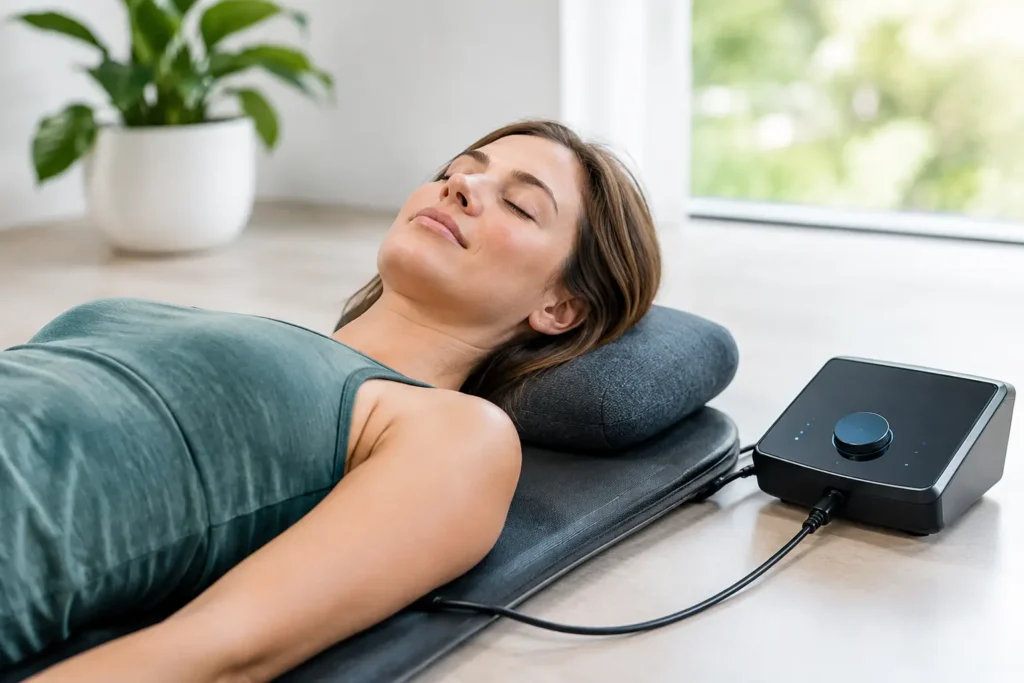
A PEMF session can feel deceptively simple: lie on the mat, select a program, and relax. Yet PEMF frequency settings are one of the first technical details that can make a premium system feel confusing. Is lower always better? Should you use one setting for sleep and another after activity? And does a higher number mean a stronger session?
Not necessarily. Frequency is only one part of a PEMF program. The right setting is usually the one that fits your goal, your schedule, your comfort level, and the guidance provided for your specific system. A thoughtful approach helps you build a consistent wellness routine without guessing or chasing the highest number on the screen.
What PEMF frequency settings actually control
Frequency describes how many electromagnetic pulses a PEMF device delivers in one second. It is measured in hertz, or Hz. A setting of 8 Hz delivers eight pulses per second. A setting of 30 Hz delivers 30 pulses per second.
That measurement matters, but it does not tell the whole story. Two systems may both offer 8 Hz while delivering a very different experience because their field intensity, waveform, applicator design, session length, polarity pattern, and program sequencing are different. This is why comparing one frequency number across devices can be misleading.
For home users, it is more useful to view frequency as a pacing control within a complete program. Some programs use one steady frequency. Others move through a range, changing the pace across the session. Premium systems may also pair PEMF with optional far infrared heat, sound, or light-based relaxation features. Those elements should be considered separately rather than treated as proof that one frequency is universally superior.
Lower frequencies and higher frequencies: the practical difference
Many people begin with lower-frequency PEMF settings because they tend to suit a calm, easy-to-integrate routine. Low-frequency programs are commonly selected during a quiet morning practice, an evening wind-down, meditation, or a rest period after a demanding day.
Higher-frequency options may be used at different times, often when a user wants a more active-feeling wellness session or is building a routine around exercise and recovery habits. But “higher” does not mean “better,” and it certainly does not mean that more is always appropriate. A 30-minute session at a moderate, comfortable setting can be more valuable than an aggressive routine you avoid after three days.
The best decision is goal-based rather than number-based. If your aim is relaxation before bed, start with a program designed for that context. If you are using PEMF as part of a post-workout recovery ritual, follow the system’s recovery-oriented guidance. The program library and training matter because they translate specifications into a routine you can actually maintain.
Do not confuse frequency with intensity
Frequency and intensity are often discussed together, but they answer different questions. Frequency refers to pulse rate. Intensity refers to the strength of the magnetic field, commonly expressed in units such as gauss or microtesla.
A session can have a low frequency and substantial intensity, or a higher frequency and lower intensity. It can also use automatic intensity adjustments or a programmed sequence. Looking at frequency alone is like evaluating a sound system based only on tempo while ignoring volume, speaker placement, and the music itself.
For that reason, avoid trying to recreate another person’s routine from a single frequency recommendation. Their device, mat, health considerations, daily schedule, and tolerance may be entirely different from yours.
How to choose a starting setting
The strongest first step is not finding the perfect number. It is starting conservatively and paying attention to how the session fits into your day. If your system includes guided programs, use those before experimenting with manual settings. They were designed to coordinate timing, frequency, and other variables in a coherent format.
Begin with shorter sessions at a gentle or default program level. Give yourself several days of consistent use before deciding whether to change frequency, duration, or intensity. Changing every variable at once makes it difficult to know what is helping and what simply does not fit your routine.
A simple personal log can be useful. Note the time of day, program used, session duration, comfort level, and whether the session supported the routine you intended – for example, a calmer transition after work or a more settled bedtime habit. This is not a diagnostic tool. It is a practical way to identify patterns and create a repeatable wellness practice.
If you are sensitive to new wellness technologies, start especially gently. A lower setting, shorter duration, and a time when you do not need to rush out the door can make the first few sessions more comfortable. Gradual progression is not a compromise. It is a smart way to build confidence with sophisticated equipment.
Let timing influence your settings
The same PEMF program may feel different depending on when you use it. Morning users often prefer a session that fits their preparation for the day. Evening users may prioritize a quieter, less stimulating-feeling experience as part of their sleep hygiene routine. Active adults may reserve certain sessions for after training, travel, or physically demanding work.
This is where preset protocols can be far more useful than endless manual adjustment. A well-designed system does not force you to become an electromagnetic engineer. It gives you a reliable starting framework, then lets you personalize your use with trained support.
For example, the iMRS Prime includes program guidance intended to help users select sessions based on their wellness objective rather than requiring them to interpret raw frequency data alone. That distinction can be decisive when investing in a high-end home PEMF system: the technology is only as valuable as your ability to use it correctly and consistently.
Common mistakes to avoid
The first mistake is assuming a frequency chart is a prescription. Online charts often present specific Hz values as if they can treat particular conditions. That is not an appropriate way to use a wellness device. PEMF systems should not be represented as diagnosing, treating, curing, or preventing disease, and individual medical questions belong with a qualified healthcare professional.
The second mistake is using sessions too long, too soon. More time is not automatically more productive. Follow the manufacturer’s instructions, begin with recommended starter sessions, and adjust gradually when appropriate.
The third is ignoring the rest of the system. Full-body mat placement, a localized applicator, optional FIR settings, hydration, comfort, and regular scheduling all influence the overall experience. Frequency is meaningful, but it is not the sole lever.
Finally, do not treat onboarding as an optional extra. A premium PEMF purchase should come with clear answers about programs, applicators, session scheduling, device care, and safety screening. Personalized training can prevent months of uncertainty and help you use the equipment with far greater confidence.
Safety comes before personalization
Even non-invasive wellness technology requires responsible use. Always read your device manual and follow its contraindications and warnings. People with implanted electronic devices, including pacemakers or implanted pumps, should not use PEMF equipment unless the device manufacturer and their healthcare professional specifically approve it. Pregnancy, active medical treatment, seizure history, and other individual circumstances may also require professional guidance before use.
Stop a session if you feel unwell, and do not use a PEMF system as a substitute for medical evaluation or prescribed care. The goal is to support healthy routines such as relaxation, rest, and recovery practices – not to self-manage a medical condition with a frequency setting.
Build a routine you will actually keep
The most effective PEMF frequency settings are rarely the most complicated ones. They are the settings you understand, feel comfortable using, and can repeat week after week. Start with the guided program that matches the moment, stay consistent long enough to learn from your experience, and make one adjustment at a time.
A capable system provides the technology. Expert instruction turns that technology into a calm, confident part of your day.
